
ClickCease RF-22 0.087" (2.2mm) Thin Riving Knife – Harvey Woodworking
Sale Off
RF-22 0.087

RF-22

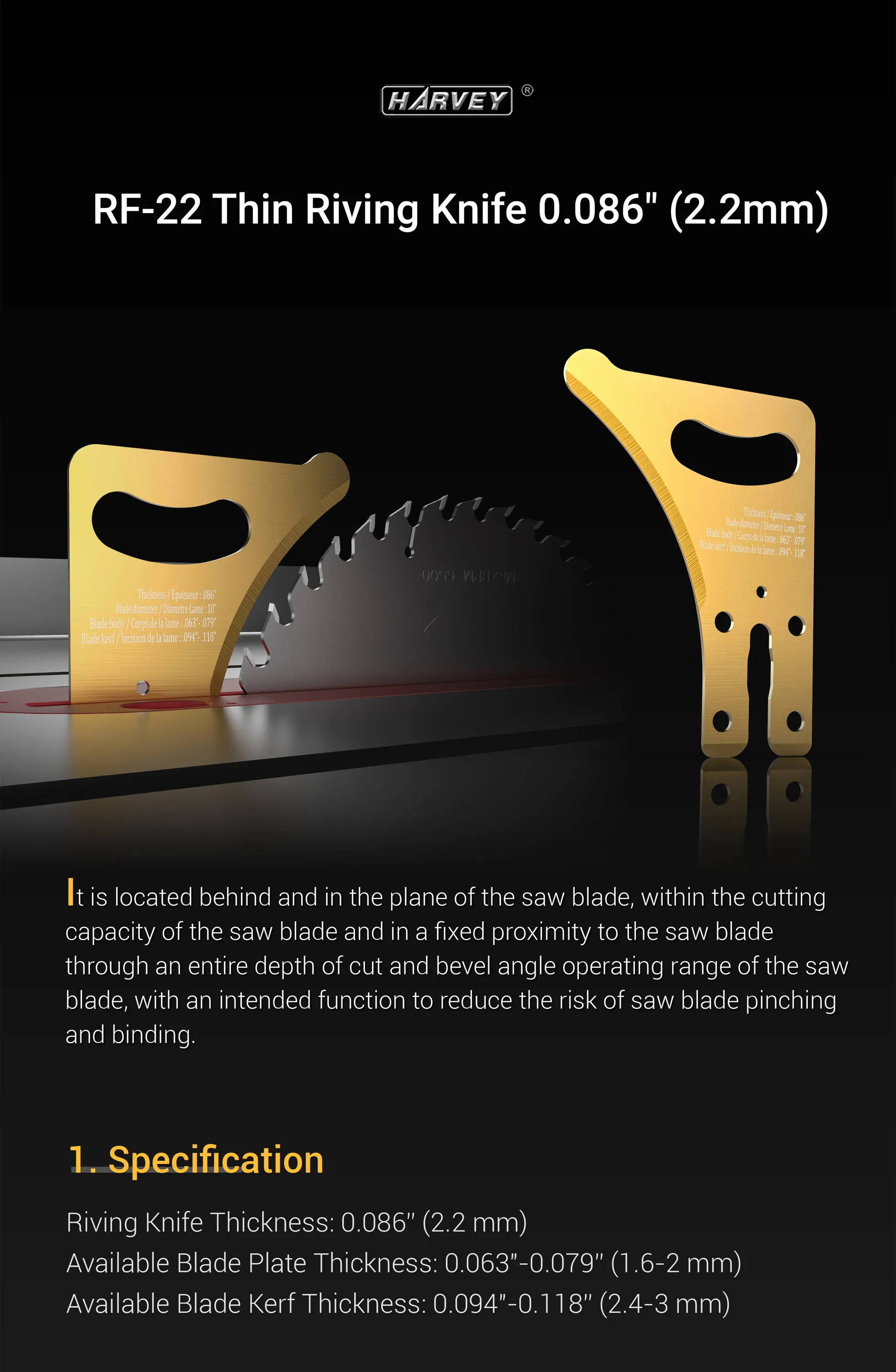
0.086" (2.2mm) Thin Riving Knife


$42.99$42.99

* Tax and shipping freight will be calculated at checkout.


"Some images on this page are computer-generated representations of the product and may differ from the actual product. Colors, textures, and other details may not be accurately represented in the images. Please refer to the product description and specifications for more information."


RF-22 0.087

RF-22

0.086" (2.2mm) Thin Riving Knife


$42.99$42.99

*Tax and shipping freight will be calculated at checkout.

System Overview:

Brand: Harvey Woodworking

Product: RF-22 Thin Riving Knife

Type: Thin kerf riving knife safety accessory

Thickness: 0.086" | 2.2mm

Application: Kickback prevention for thin kerf blade (0.094" - 0.118" | 2.4mm - 3mm) operations on professional table saws

Product Features and Benefits:

Safety Enhancement Features

Kickback Prevention System:


ChatGPT

• Positioned Behind Blade directly in the cutting plane for maximum safety

• Fixed Proximity Maintained throughout entire depth of cut range

• Full Bevel Angle Coverage functions through complete operating range

• Pinch Prevention stops wood from closing on blade during through-cuts

• Accident Risk Reduction significantly reduces dangerous kickback incidents


Material Binding Prevention:


ChatGPT 诓:

• Ultra-Thin Profile minimizes interference with cut material

• Kerf Opening Maintenance keeps kerf open behind blade during cutting

• Workpiece Protection prevents material from closing on blade

• Binding Reduction minimizes binding-related accidents and injuries


Precision Design Features

Thin Kerf Optimization:


• 0.086" | 2.2mm Thickness designed specifically for thin kerf blades

• Compatible Blade Kerf Range 0.094" to 0.118" | 2.4mm - 3mm

• Material Waste Reduction minimizes waste compared to standard riving knives

• Optimized Clearance for smooth cutting operations


Professional Engineering:


• Precision Manufacturing exact tolerances throughout

• Consistent Alignment maintains alignment with saw blade

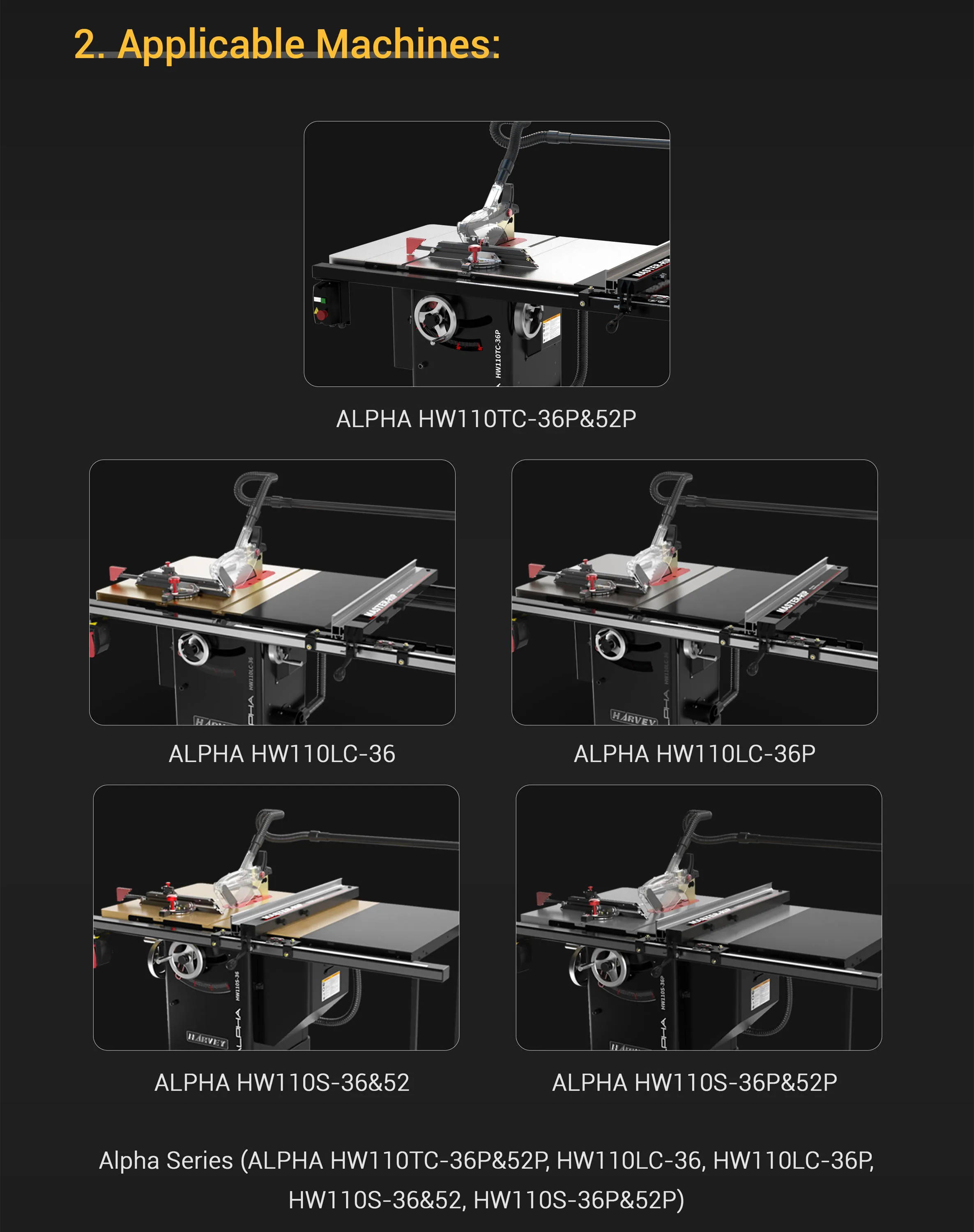
• Harvey Compatibility designed for Harvey mounting systems like the Alpha Series (ALPHA HW110TC-36P&52P, HW110LC-36, HW110LC-36P, HW110S-36&52, HW110S-36P&52P)

• Long-Term Performance engineered for reliable operation


Construction Quality

Durable Steel Construction:


• High-Quality Hardened Steel for exceptional durability

• Professional-Grade withstands demands of frequent use

• Workshop Ready designed for demanding environments

• Corrosion-Resistant Finish for longevity


Installation Features

Quick-Change Compatibility:


• Plug-In Quick Change System compatible with Harvey's patented system

• Seconds to Change riving knife changes within seconds

• No Table Insert Removal required for installation

• Simple Operation slide, rotate, and lock


Universal Mounting:


• Harvey Alpha Series full compatibility

• Harvey Ambassador Series full compatibility

• Standard Mounting Brackets fits Harvey riving knife brackets

• Third-Party Compatibility customer-reported fit with select Grizzly models


Technical Specifications

RF-22 Thin Riving Knife Specifications:


• Model RF-22

• Product Type Thin Kerf Riving Knife

• Knife Thickness 0.086" | 2.2mm

• Compatible Blade Kerf Range 0.094" to 0.118" | 2.4mm - 3mm

• Blade Size Compatibility 10" Table Saw Blades

• Construction Material High-Quality Hardened Steel

• Finish Corrosion-Resistant

• Compatible Table Saw Series Harvey Alpha & Ambassador

• Mounting System Plug-In Quick Change

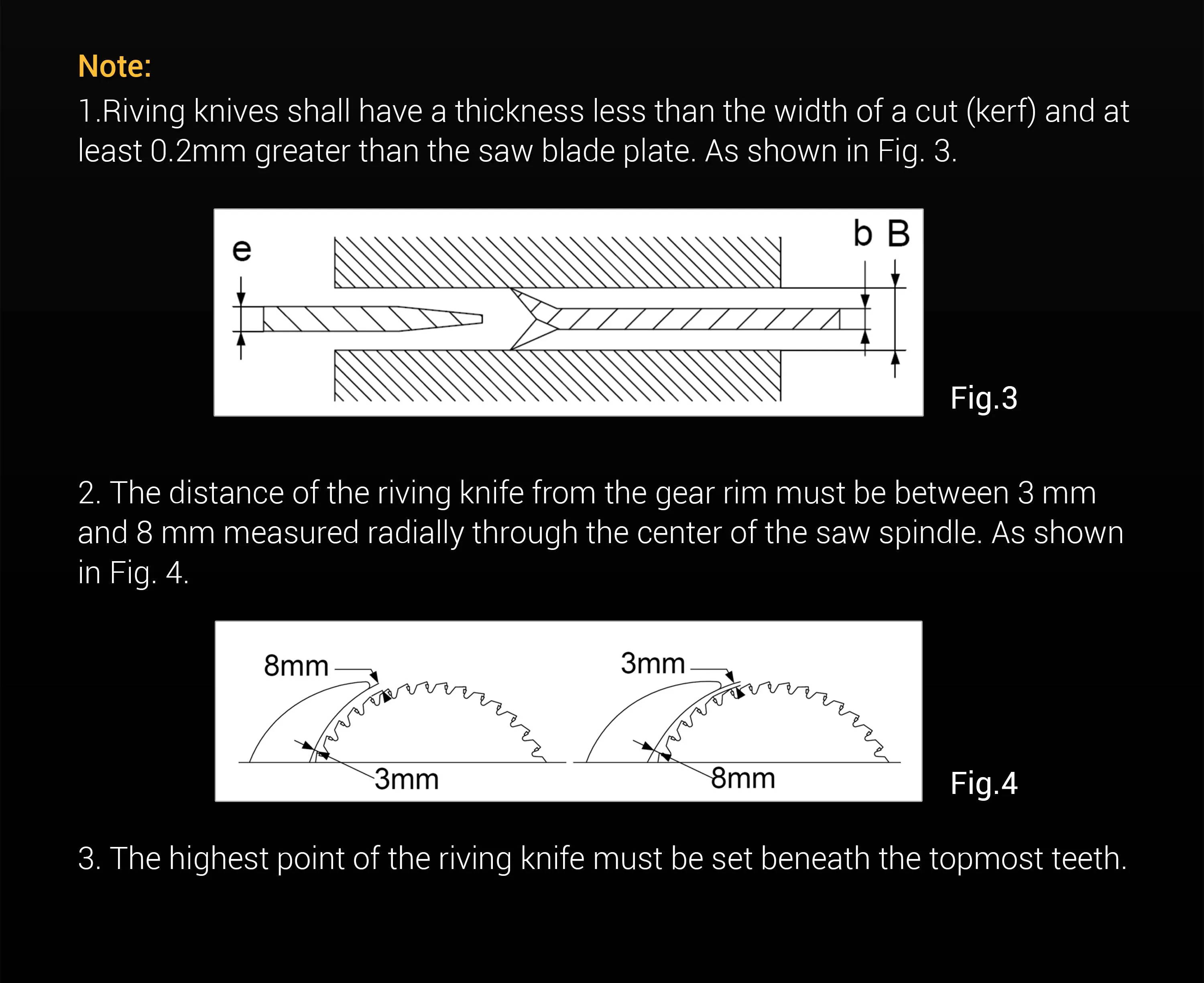
• Recommended Blade-to-Knife Gap 3-8mm


Riving Knife Comparison (Alpha & Ambassador Table Saws ALPHA HW110TC-36P&52P, HW110LC-36, HW110LC-36P, HW110S-36&52, HW110S-36P&52P):

RF-22 Thin Kerf Riving Knife:


• Thickness 0.086" | 2.2mm

• Compatible Blade Kerf 0.094" to 0.118" | 2.4mm - 3mm

• Best Application Thin Kerf Blades (0.094" - 0.118" | 2.4mm - 3mm)


Standard Riving Knife:


• Thickness 0.100" | 2.54mm

• Compatible Blade Kerf 0.102" to 0.126" | 2.6mm - 3.2mm

• Best Application Standard/Full Kerf Blades


Compatible Table Saws


Harvey Alpha Series:


• HW110LC-36 10" 2HP Left-Tilt Cabinet Saw (36" Rip)

• HW110LC-36Pro 10" 2HP Stainless Cabinet Saw with Big Eye Rip Fence

• HW110S-36(P) 10" 3HP Cabinet Saw (36" Rip)

• HW110S-52(P) 10" 3HP Cabinet Saw (52" Rip)

• HW110TC Series 10" Tilting Cabinet Table Saws


Harvey Ambassador Series:


• C200-30 10" 2HP Entry-Level Cabinet Table Saw (30" Rip)

• C300-30 10" 3HP Cabinet Table Saw (30" Rip)

• C300-50 10" 3HP Cabinet Table Saw (50" Rip)

Safety Features and Requirements


Operational Safety:

Primary Function - Kickback Prevention::


• Rotation Prevention prevents workpiece from rotating into blade

• Kerf Maintenance keeps kerf open to prevent pinching

• Safe Cutting Conditions maintains safety throughout operation

• Essential Safety Device for through-cutting operations


Proper Positioning Requirements:


• Distance from Blade must be positioned 3-8mm from rear of blade

• Plane Alignment must be aligned in same plane as blade

• Height Tracking must track with blade through all height adjustments

• Bevel Angle must remain parallel to blade at all bevel angles


Required Safety Practices:

Before Each Use:


• Installation Verification verify riving knife is properly installed and locked

• Alignment Check check alignment with blade

• Kerf Compatibility confirm blade kerf matches riving knife specifications

• Damage Inspection ensure no damage or bending to riving knife


During Operation:


• Riving Knife Required never operate table saw without riving knife for through-cuts

• Body Position maintain proper position (never stand directly behind blade)

• Push Sticks use for narrow workpieces

• Blade Speed allow blade to reach full speed before cutting


After Blade Changes:


• Alignment Check always check riving knife alignment

• Kerf Verification verify kerf compatibility with new blade

• Re-Adjustment re-adjust if switching between thin kerf and standard blades

• Cycle Test test blade raise/lower cycle before cutting


Safety Warnings:

Critical Compatibility Warning:


• Thickness Requirement riving knife MUST be thinner than blade kerf

• Incorrect Use Risk using incorrect riving knife can cause binding and kickback

• RF-22 thin kerf riving knife application ONLY for thin kerf blades (0.094" - 0.118" kerf)

• Standard Blades use standard riving knife for standard/full kerf blades


Prohibited Operations:


• No Removal never remove riving knife for through-cutting operations

• No Damaged Use never operate with damaged or bent riving knife

• No Incompatible Blades never use RF-22 with standard or full kerf blades

• No Forcing never force riving knife into position if resistance is felt


When to Remove Riving Knife:

The riving knife should ONLY be removed for:


• Non-Through Cuts dados, rabbets, grooves

• Dado Blade Operations when using dado blade sets

• Specific Jig Operations requiring removal

Maintenance Schedule:


Daily Maintenance:


• Visual Inspection check for damage, bending, or wear

• Mounting Verification verify secure mounting before each use

• Alignment Check check alignment with blade

• Dust Removal clean sawdust accumulation from mounting area


Weekly Maintenance:


• Surface Cleaning thorough cleaning of riving knife surface

• Bracket Inspection inspect mounting bracket for proper function

• Lock Verification verify locking mechanism engages fully

• Corrosion Check check for any rust or corrosion


Monthly Maintenance:


• Deep Cleaning remove and clean riving knife thoroughly

• Crack Inspection inspect for any cracks or stress marks

• Bracket Cleaning clean mounting bracket and slot

• Rust Prevention apply rust preventive if needed

• Accuracy Verification verify alignment accuracy with straightedge


Annual Maintenance:


• Complete Inspection full inspection of mounting system

• Set Screw Check check mounting bracket set screws for wear

• Spring Tension verify spring tension in locking mechanism

• Replacement Assessment replace if any damage or excessive wear detected


Warning Signs Requiring Replacement:


• Bending or Warping any visible deformation

• Cracks cracks or stress fractures

• Rust significant surface rust or pitting

• Edge Wear worn edges causing material snagging

• Loose Fit loose fit in mounting bracket

• Alignment Issues inability to maintain proper alignment

Frequently Asked Questions:


Product Selection:


What is the difference between the RF-22 thin kerf riving knife and the standard riving knife?

The RF-22 thin kerf riving knife has a thickness of 0.086" | | 2.2mm and is designed for thin kerf blades with kerfs between 0.094" and 0.118" | 2.4mm - 3mm. The standard Harvey riving knife has a thickness of 0.100" and is designed for standard blades with kerfs between 0.102" and 0.126" | 2.6mm and 3.2mm. Using the correct riving knife for your blade type is essential for safe operation.


How do I know if I need the RF-22 thin kerf riving knife or the standard riving knife?

Check your saw blade's specifications for the kerf measurement. If your blade kerf is between 0.094" and 0.118" | 2.4mm - 3mm, use the RF-22 thin kerf riving knife. If your blade kerf is between 0.102" and 0.126" | 2.6mm and 3.2mm, use the standard riving knife. The riving knife must always be thinner than the blade kerf.


Can I use the RF-22 thin kerf riving knife with any thin kerf blade?

The RF-22 thin kerf riving knife is compatible with thin kerf blades that have a kerf measurement between 0.094" and 0.118" | | 2.4mm - 3mm. Verify your specific blade's kerf measurement before use. Some ultra-thin kerf blades may have kerfs below 0.094" | 2.4mm and would not be compatible.


 Why do thin kerf blades require a special riving knife like the RF-22 ?

Standard riving knives are typically too thick for thin kerf blades. For safety and alignment, it's important to use a thin kerf-compatible riving knife. Always verify that your blade and riving knife are properly matched to maintain both cut quality and operator safety.


What are the advantages of using thin kerf blades with the RF-22 thin kerf riving knife?

Thin kerf blades offer two main advantages: (1) Reduced Material Waste - the thinner blade removes less material, resulting in less sawdust and more usable wood per cut, and (2) Improved Performance on Lower Horsepower Saws - requires less power to cut, making it ideal for saws under 3HP where full-kerf blades may bog down.


Installation:


What should I check before each use of the RF-22 riving knife ?

Before each use: verify the riving knife is properly installed and locked, check alignment with the blade, confirm blade kerf matches riving knife specifications (0.094" - 0.118" | 2.4mm - 3mm), and ensure there is no damage or bending to the riving knife.


What should I do after changing blades?

After blade changes: always check riving knife alignment, verify kerf compatibility with the new blade, re-adjust if switching between thin kerf and standard blades, and test the blade raise/lower cycle before cutting.


How difficult is it to install the RF-22 riving knife?

Installation is straightforward and typically takes 5-10 minutes. Harvey table saws feature a "plug-in quick change" system that allows riving knife changes within seconds without removing the table insert. Simply slide the knurled knob, rotate to disengage the old knife, insert the RF-22 thin kerf riving knife, and rotate to lock.


Do I need any special tools to install the RF-22 thin kerf riving knife?

No special tools are required for basic installation. If alignment adjustment is needed, you may need a hex wrench to adjust the mounting bracket set screws. Most users can complete installation without any tools.


Do I need to remove the riving knife when cutting a zero clearance insert (ZC-10)?

Yes. Please ensure to remove the riving knife when cutting the ZC-10 zero clearance insert. The riving knife extends over the blade, which can prevent the blade from cutting completely through the insert. Removing the riving knife will allow for a full and proper cut. Reinstall the riving knife after completing the insert cut.


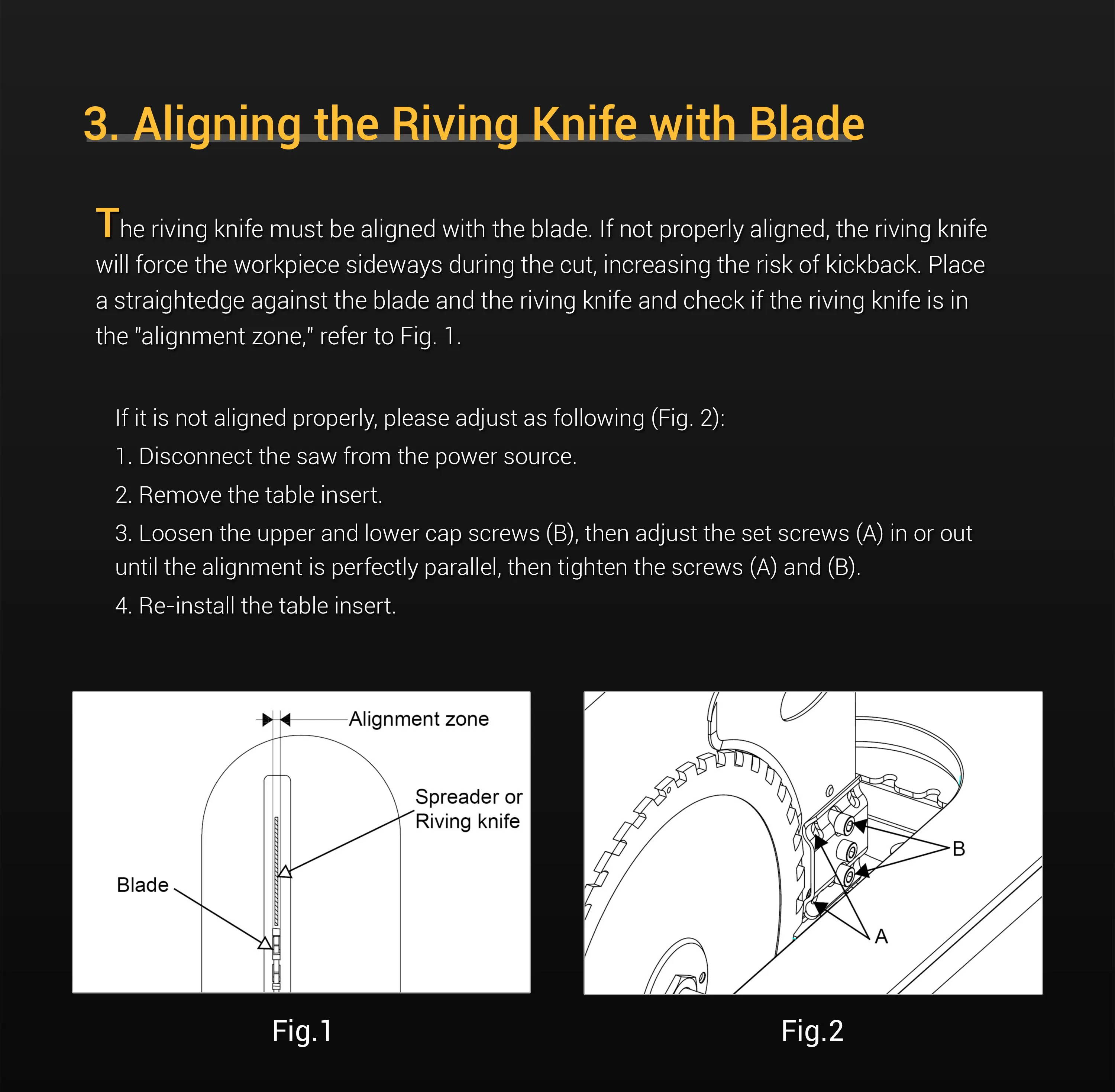
How do I align the riving knife with my blade?

The riving knife should be centered with the blade and positioned 3-8mm behind it. If adjustment is needed, use the four set screws on the mounting block: the bottom two screws adjust the tip position, while the upper two adjust the overall lateral position. Check alignment at multiple blade heights.


How do I use the set screws to align the riving knife?

The riving knife mounting block has four set screws that act as a leveling system. To adjust the tip of the riving knife, focus on the bottom two set screws - adjusting these will shift the tip either left or right relative to the blade. To move the entire knife left or right for alignment with the blade, use the upper two set screws to fine-tune its lateral position.


How do I test if my riving knife adjustment was successful?

After adjustment, check that the riving knife is locked into place and verify how much shift there is up and down when installing and removing it. Test raising and lowering the blade to confirm the spreader bracket arm doesn't get stuck. Once satisfied, reconnect power and make a test cut with scrap wood to ensure the riving knife and blade guard assembly is stable with no rocking or looseness.


Operation and Safety:


 What is the primary function of the RF-22 thin riving knife?

The primary function is kickback prevention. It prevents the workpiece from rotating into the blade, keeps the kerf open to prevent pinching, and maintains safe cutting conditions throughout operation. It is an essential safety device for through-cutting operations.


What are the proper positioning requirements for the RF-22 riving knife? 

The riving knife must be positioned 3-8mm from the rear of the blade, aligned in the same plane as the blade, must track with the blade through all height adjustments, and must remain parallel to the blade at all bevel angles.


What is the correct gap between the riving knife and blade?

The riving knife should be positioned 3-8mm (approximately 1/8" to 5/16") behind the rear of the blade. This gap allows the knife to perform its safety function while providing clearance for the blade's movement.


Can I use the RF-22 thin kerf riving knife for dado cuts or non-through cuts?

No. The riving knife should be removed for dado cuts, rabbets, grooves, and other non-through cut operations. The riving knife is designed specifically for through-cutting operations where it prevents kickback by keeping the kerf open.


Why is using the correct riving knife thickness important?

The riving knife must be thinner than the blade kerf to prevent binding. If the riving knife is too thick for the blade, it will contact the workpiece and cause dangerous binding or kickback. If the riving knife is significantly thinner than needed, it may not effectively prevent the workpiece from pinching the blade.


My riving knife or blade guard assembly has rocking or play. What's wrong?

This may indicate the riving knife spreader bracket needs tightening. Before adjusting, disconnect the table saw from power. Tighten the screws and nuts just enough to eliminate vertical or lateral play. After adjustment, test raising and lowering the blade and make a test cut with scrap wood to ensure stability


When should I remove the riving knife?

The riving knife should ONLY be removed for non-through cuts (dados, rabbets, grooves), dado blade operations, and specific jig operations requiring removal. Always reinstall the riving knife immediately after completing non-through cut operations.


What should I never do with the RF-22 riving knife?

Never remove the riving knife for through-cutting operations, never operate with a damaged or bent riving knife, never use the RF-22 with standard or full kerf blades, and never force the riving knife into position if resistance is felt.


Compatibility:


Which Harvey table saws are compatible with the RF-22 thin kerf riving knife?

The RF-22 thin kerf riving knife is designed for all Harvey Alpha series table saws (HW110LC-36, HW110LC-36Pro, HW110S-36(P), HW110S-52(P), HW110TC series) and all Harvey Ambassador series table saws (C200-30, C300-30, C300-50) with 10" blades.


What blades should I NOT use with the RF-22 thin kerf riving knife?

Do not use the RF-22 thin kerf riving knife with standard kerf blades (0.102" - 0.126" | 2.6mm and 3.2mm.kerf), full kerf blades (0.125" | 3.175mm + kerf), or dado blade sets. These require the standard riving knife or no riving knife (for dados). Also avoid ultra-thin kerf blades with kerfs below 0.094" | 2.4mm.


 Is the RF-22 thin kerf riving knife compatible with other brands of table saws besides Harvey?

The RF-22 thin kerf riving knife is designed specifically for Harvey Alpha series table saws (HW110LC-36, HW110LC-36Pro, HW110S-36(P), HW110S-52(P), HW110TC series) and Harvey Ambassador series table saws (C200-30, C300-30, C300-50). Please verify your saw's riving knife mounting system and dimensions match Harvey specifications before purchasing. Harvey cannot guarantee compatibility with non-Harvey table saws.


Can I use the RF-22 thin kerf riving knife on a bandsaw?

No. The RF-22 thin kerf riving knife is designed specifically for 10" table saws, not bandsaws. Bandsaws use a different blade guidance system and do not use riving knives. Riving knives are a table saw-specific safety device designed to prevent kickback during through-cutting operations.


Maintenance:


How do I clean and maintain the RF-22 thin kerf riving knife?

Wipe the riving knife with a clean, dry cloth after each use to remove sawdust. Periodically remove it for thorough cleaning with mineral spirits if needed. Apply a light coat of rust preventive if storing for extended periods. Inspect regularly for any damage or bending.


How long should the RF-22 thin kerf riving knife last?

With proper care and use, the RF-22 thin kerf riving knife should provide years of reliable service. Replace immediately if any bending, cracks, significant corrosion, or wear is detected. The riving knife is a critical safety component and should never be used if damaged.


Troubleshooting:


Why does my riving knife shift when I raise or lower the blade?

If the knife shifts side to side as you change the direction of raising or lowering the blade, there may be excess play in the mounting bracket holding the riving knife in place. This indicates the spreader bracket may need tightening.


My riving knife won't lock into the mounting bracket. What should I do?

Ensure the blade is raised to provide adequate clearance. Check that the riving knife is properly aligned with the mounting slot. Loosen the bracket tension screw slightly if resistance is excessive. If problems persist, contact Harvey Technical Support.


The riving knife is not aligned with my blade. How do I fix this?

Use the four set screws on the mounting block to adjust alignment. The bottom two screws adjust the knife tip position, while the upper two adjust overall lateral position. Make small adjustments and check alignment at multiple blade heights. Avoid over-tightening the blade raise handle as this can cause misalignment.


Why is my riving knife difficult to remove or install?

This is usually due to one of two issues: (1) The riving knife locking pin is not fully released - ensure the locking pin is fully disengaged, or (2) The cap screw on the riving knife bracket is overtightened. Using an Allen wrench, slightly loosen the cap screw located in the center of the riving knife bracket by 1/4 to 1/2 turn. This helps relieve pressure on the bracket, making it easier to slide the knife in and out.


How can I check if my riving knife alignment issue is caused by excess play in the mounting bracket?

Slowly raise and lower the blade using the crank handle and watch both the blade and riving knife. If the knife shifts side to side as you change the direction of raising or lowering, there may be excess play in the mounting bracket holding the riving knife in place. This indicates the spreader bracket may need tightening.


Customer Reviews

Based on 19 reviews
95%
(18)
0%
(0)
0%
(0)
5%
(1)
0%
(0)
R
R.R.m. (Escanaba, US)
Works good now I can use thinner

Works good now I can use thinner blades

D
D.M. (Paducah, US)
Perfect fit!

Worked great on my Grizzly 715P table saw!

R
R.G. (Philadelphia, US)
Great fit!!

Bought for my grizzly table saw and fits perfect. Identical to the riving knife that came with my table saw just for thin kerf. Perfect

E
E.V. (Dallas, US)
Perfectly engineered riving knife

This riving knife does a great job of eliminating kick back. It’s not only engineered to perfection it’s also so beautiful.

S
S.W. (Salisbury, US)
Works good

I wish the thin kerf riving knife was the same size of the one used for dust collection. This one you have no upper dust collection.

S
S.J. (Whitwell, US)

RF-22 0.087" (2.2mm) Thin Riving Knife

M
M.M. (Las Vegas, US)
Works great

Fits perfect. I would like to see a thin kerf replacement for the over arm dust collection blade guard.

P
P.B.

Still in the package.